


5 min read
Yucca Mountain Site: Approved for EEOICPA benefits
Image: United States Department of Energy photo, Public domain, via Wikimedia Commons The significance of the Yucca...

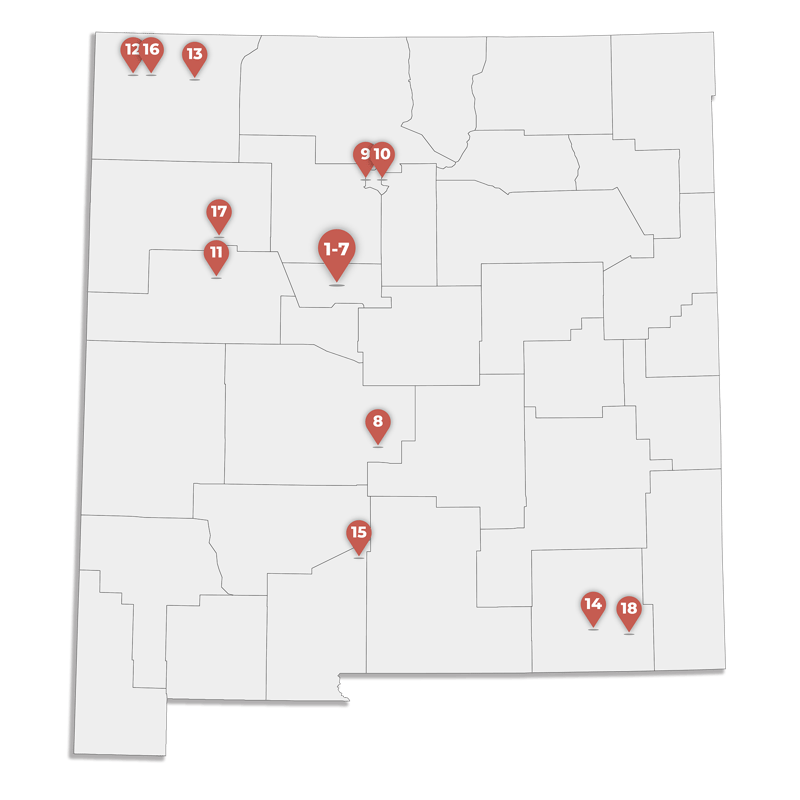
New Mexico has 18 facilities covered by the EEOICPA White Card Program. New Mexico is also a designated Uranium Worker State meaning certain uranium industry employment is covered under the Radiation Exposure Compensation Act (RECA) throughout the entire state.
To receive Trusted Ally care in New Mexico, you simply need to reside here. Your employment may have occurred at any approved EEOICPA location nationwide.

 (SEC) = The Special Exposure Cohort. This is a defined category of employees established under the EEOICPA White Card Program. The SEC is comprised of classes of employees who have at least one of the 22 SEC cancers and have worked for a specific period of time at one of the SEC facilities. Claims compensated under the SEC do not have to go through the dose reconstruction process, as is required for other cancer claims covered by the EEOICPA White Card Program.
Accurate Machine & Tool provides machine shop services to Sandia National Laboratory and these services have included the use of beryllium-copper materials.
The Albuquerque Operations Office serves as the primary field organization for the Department of Energy's major defense program. Its primary goal is overseeing and maintaining the nation's nuclear weapons stockpile.
The Department of Energy contracted with Ross Aviation, Inc. to operate Hangar 481 located on the Kirtland Air Force Base due to the proximity of Sandia National Laboratory.
The Kirtland Operations Office was founded in 1964 as part of the United States atmospheric nuclear testing readiness program. Today, this facility supports the National Nuclear Security Administration.
The Lovelace Respiratory Research Institute (LRRI) is located on Kirtland Air Force Base. It was established in 1960 to research the health consequences of inhaling airborne radioactive materials. The Institute was privatized on June 20, 2013. Throughout operations, the potential for beryllium exposure existed at this site due to beryllium use, residual contamination, and decontamination activities.
Established in 1949, Sandia National Laboratories designed non-nuclear components for nuclear weapons. Since 1953, areas have been used to test nuclear and non-nuclear weapons components and from 1946-1957, the facility also housed a weapons assembly line. From 1963-1971, Sandia had an onsite liquid waste disposal system for radioactive discharges from the Sandia Experimental Reactor Facility. Throughout operations, the potential for beryllium exposure existed at this site, due to beryllium use, residual contamination, and decontamination activities.
The South Albuquerque Works facility was owned by the Atomic Energy Commission from 1951-1967 and used it to produce weapons components.
Chupadera Mesa is located in the White Sands Missile Range and was part of the fallout area from the Trinity test.
Los Alamos Medical Center started as an Army hospital for Manhattan Project workers. A new facility was constructed in 1951 and opened in January 1952. The Atomic Energy Commission sold the hospital to a private entity in 1963.
Operated by the University of California, the Los Alamos National Laboratory (LANL) developed and tested the world’s first nuclear weapons. After World War II, this site continued as a nuclear weapons research and development facility. LANL also used its research facilities for other areas of weapons production, particularly plutonium processing and fabrication of weapon components. Throughout operations, the potential for beryllium exposure existed at this site, due to beryllium use, residual contamination, and decontamination activities.
The ore buying station at Grants purchased uranium ore for the Atomic Energy Commission (AEC). Lucius Pitkin managed and operated the Grants station on behalf of the AEC from July 1956 to mid-1958.
The ore buying station at Shiprock purchased uranium ore for the Atomic Energy Commission. American Smelting and Refining Company managed and operated the Shiprock station from July 1952 to January 1954.
The Project Gasbuggy site is where the Atomic Energy Commission conducted a nuclear test as part of the Plowshare program that was initiated in 1957 to develop peaceful applications for nuclear explosives. On December 10, 1967, a 29 kiloton nuclear yield device was detonated in an underground shaft in natural gas and shale deposits to determine if nuclear explosives would release natural gas not recoverable by conventional methods. The operation ended in 1973 and the site was on standby until cleanup began in August 1978. A second shot was canceled because the Gasbuggy shot vented to the atmosphere.
The Project Gnome Test site is where the Atomic Energy Commission conducted a nuclear test as part of the Plowshare program that was initiated in 1957 to develop peaceful applications for nuclear explosives. In December 10, 1961, Shot Gnome, a 3 kiloton yield nuclear device was detonated in an underground shaft to identify the effects and products of a nuclear explosion in a salt medium but the shot vented some radioactivity into the atmosphere.
The Trinity test in July 1945 at the Alamogordo Bombing and Gunnery Range was the world's first ever nuclear explosion which released 18.6 kilotons of power, instantly vaporizing the tower and turning the surrounding asphalt and sand into glass. Seconds after the explosion, an enormous blast sent searing heat across the desert and knocked observers to the ground. The success of the Trinity test meant that an atomic bomb using plutonium could be readied for use by the U.S. military.
This mill processed about 1.5 million short tons of uranium ore and is covered under RECA and not separately covered under EEOICPA. However, environmental remediation was performed by DOE contractors from October 1984 through November 1986 and those contractors are covered under EEOICPA.
This mill processed vanadium and uranium from 1957 through 1961 and is covered under RECA and not separately covered under EEOICPA. However, environmental remediation was performed by DOE contractors from July 1987 to April 1989 and again from October 1992 to July 1995 and those contractors are covered under EEOICPA.
The Waste Isolation Pilot Plant (WIPP) was designed for the disposal of radioactive waste resulting from the research and production of nuclear weapons. It is the world’s first underground repository licensed to safely and permanently dispose of radioactive waste. WIPP began operations on March 26, 1999.
Trusted Ally Home Care
500 Marquette Ave NW, Suite 1200
Albuquerque, NM 87102
A: RECA (Radiation Exposure Compensation Act) is a federal program that pays $100,000 in tax-free compensation to certain people who became sick due to radiation exposure connected to atmospheric nuclear weapons testing, and/or uranium industry employment. RECA does not cover healthcare costs, it's a lump sum payment only. However, many people who qualify for RECA compensation can also qualify for EEOICPA benefits which provides even more tax-free compensation and covers healthcare costs for approved conditions. RECA is often a pathway to EEOICPA benefits for uranium workers.
A: Trusted Ally provides comprehensive EEOICPA services throughout New Mexico including benefits navigation and claims support, skilled nursing, home health aides, family health aides, case management, and Healthgevity Personal Wellness. All services are available at no cost to eligible EEOICPA beneficiaries with covered conditions.
A: To receive Trusted Ally care in New Mexico, you simply need to reside here. Your employment may have occurred at any approved EEOICPA location nationwide. New Mexico residents who worked at facilities such as Los Alamos National Laboratory, Sandia National Laboratories, the WIPP (Waste Isolation Pilot Plant), uranium mines and mills throughout New Mexico and the western United States, or any other covered DOE or AWE facility may qualify. Both workers and eligible survivors may qualify for tax-free compensation and medical benefits.
A: Major covered New Mexico facilities include Los Alamos National Laboratory (LANL), Sandia National Laboratories in Albuquerque, the Waste Isolation Pilot Plant (WIPP) near Carlsbad, numerous uranium mines and mills throughout New Mexico, radium processing facilities, and various DOE contractor sites throughout the state. New Mexico is also designated as a Uranium Worker State under the Radiation Exposure Compensation Act (RECA).
A: If you worked at a covered New Mexico facility such as Los Alamos National Laboratory, Sandia National Laboratories, WIPP, a uranium mine or mill, or as a DOE contractor, and you developed an approved illness linked to radiation or toxic exposure, you may be eligible. Contact Trusted Ally at 1-866-286-6426 for a free eligibility review of your work history and health condition.
A: Yes! Through our Family Health Aide program, eligible family members can be trained, hired, and compensated with competitive W2 wages and full benefits when they serve as caregivers for New Mexico EEOICPA beneficiaries. This allows your loved one to receive care from someone they trust while the family caregiver receives professional support and fair compensation.
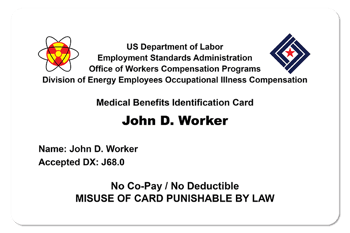
A: Yes. For approved EEOICPA beneficiaries with covered conditions, all home healthcare services including skilled nursing, home health aides, family health aides, case management, and Healthgevity Personal Wellness are provided at no cost through the EEOICPA White Card Program. There are no copays, deductibles, or out-of-pocket expenses.
A: Los Alamos National Laboratory (LANL), located in Los Alamos, New Mexico, was the birthplace of the atomic bomb as part of the Manhattan Project. Since 1943, LANL has been a primary nuclear weapons research and development facility. Los Alamos National Laboratory is a covered facility under EEOICPA, and workers who were employed there may qualify for compensation and medical benefits for covered illnesses related to radiation and toxic exposure.
A: Yes. Sandia National Laboratories in Albuquerque, New Mexico, has been a key nuclear weapons research, development, and engineering facility since 1949. Sandia is a covered facility under EEOICPA. Workers who were employed at Sandia and developed covered illnesses related to radiation or toxic exposure may be eligible for compensation and home healthcare benefits.
A: Yes. The Waste Isolation Pilot Plant (WIPP) near Carlsbad, New Mexico, is a Department of Energy facility that has been used for the disposal of defense-related transuranic radioactive waste since 1999. WIPP is a covered facility under EEOICPA, and workers who were employed there may qualify for compensation and medical benefits.
A: If you worked at multiple covered New Mexico facilities such as Los Alamos National Laboratory, Sandia National Laboratories, WIPP, or various uranium mines, you should report all of your employment history when filing your EEOICPA claim. Working at multiple sites may strengthen your claim and could affect your compensation eligibility. Trusted Ally can help you document all relevant employment.
A: It's possible. New Mexico is designated as a Uranium Worker State, meaning certain uranium industry employment throughout the entire state is covered under the Radiation Exposure Compensation Act (RECA). Uranium workers who are approved for RECA compensation may also qualify for EEOICPA benefits.
A: Covered illnesses include 22 specified cancers (lung, liver, colon, kidney, thyroid, breast, leukemia, lymphoma, and others), chronic beryllium disease, beryllium sensitivity, silicosis, chronic obstructive pulmonary disease (COPD), pulmonary fibrosis, and other illnesses that can be linked to radiation or toxic exposure through medical evidence.
A: Eligible New Mexico workers may receive up to $400,000 in tax-free compensation depending on their illness and exposure history. EEOICPA provides compensation under Part B (up to $150,000 for radiation-related cancers or beryllium disease) and Part E (up to $250,000 for illnesses caused by toxic exposure). Workers may qualify for one or both parts of the program.
A: Contact Trusted Ally at 1-866-286-6426 to speak with a New Mexico EEOICPA specialist. We'll review your work history at covered facilities nationwide, help determine your eligibility, guide you through the claims process if needed, and connect you with home healthcare services once your benefits are approved.
A: Absolutely. Our team specializes exclusively in EEOICPA benefits and has extensive experience with the unique health challenges facing former Los Alamos National Laboratory workers, Sandia National Laboratories employees, WIPP workers, uranium miners, and other nuclear industry employees. We understand the specific exposures, covered conditions, and Department of Labor requirements for New Mexico claimants.
A: Trusted Ally specializes exclusively in EEOICPA benefits and deeply understands New Mexico's nuclear weapons development and uranium mining history. We provide personalized, local support throughout the state, expert knowledge of Department of Labor requirements, comprehensive care from claims to home healthcare, and a commitment to honoring the service and sacrifice of New Mexico's nuclear workers.
A: Yes. Eligible survivors, including spouses and children of deceased New Mexico nuclear workers who developed covered illnesses, may qualify for survivor benefits under EEOICPA Part E. Survivors can receive compensation and may access certain support services. Contact Trusted Ally to discuss your specific situation.
A: It's never too late to apply for EEOICPA benefits. There is no time limit for filing a claim. Many Los Alamos National Laboratory workers, Sandia National Laboratories employees, and uranium miners are just now learning about their eligibility for benefits. Even if you worked at a covered facility decades ago, if you have developed a covered illness, you should contact Trusted Ally at 1-866-286-6426 to explore your eligibility.
A: If your EEOICPA claim was previously denied, you may have options to appeal or refile, especially if you have additional medical evidence or if new information about exposure at your facility has become available. Contact Trusted Ally for guidance on next steps. We can help you understand why your claim was denied and work with you to strengthen your case.
A: The EEOICPA claims timeline varies depending on the complexity of your case and how quickly documentation can be gathered. Simple claims with complete documentation may be processed in several months, while more complex cases can take a year or longer. Working with Trusted Ally can help expedite the process by ensuring all necessary documentation is submitted properly from the start.
A: Essential documentation includes proof of employment at a covered New Mexico facility (pay stubs, W-2 forms, badges, employment verification letters), dates of employment, medical records documenting your diagnosis, and if possible, information about your job duties and potential exposures. Trusted Ally can help you gather all necessary documentation to support your claim.
A: Yes. Trusted Ally proudly serves EEOICPA beneficiaries throughout the entire state of New Mexico, including Albuquerque, Santa Fe, Las Cruces, Los Alamos, Rio Rancho, Roswell, Farmington, Carlsbad, and all surrounding communities. Our team understands the unique history of New Mexico's nuclear weapons development and uranium industries.
A: New Mexico played a central role in the Manhattan Project, the secret World War II program to develop the atomic bomb. Los Alamos was selected as the primary site for designing and assembling the first nuclear weapons. The first atomic bomb was successfully tested at the Trinity Site in southern New Mexico on July 16, 1945. This historic legacy means thousands of New Mexico workers may now be eligible for EEOICPA compensation and medical benefits.
A: Yes. Workers at uranium processing facilities, uranium mills, and other Atomic Weapons Employer (AWE) facilities throughout New Mexico may be covered under EEOICPA. This includes facilities involved in uranium extraction, milling, processing, and related activities that supported the nuclear weapons program. Contact Trusted Ally to determine if your specific employer and job duties qualify.
Receive updates on the EEOICPA White Card Program and Radiation Exposure Compensation Act (RECA) by signing up here.
Sep 11, 2026 by Trusted Ally Staff
Sep 4, 2026 by Trusted Ally Staff
Aug 28, 2026 by Trusted Ally Staff
Aug 19, 2026 by Trusted Ally Staff
Aug 13, 2026 by Trusted Ally Staff
Aug 7, 2026 by Trusted Ally Staff
Jul 31, 2026 by Trusted Ally Staff
Jul 27, 2026 by Trusted Ally Staff
Jun 12, 2026 by Trusted Ally Staff
May 28, 2026 by Trusted Ally Staff
May 15, 2026 by Trusted Ally Staff
Apr 27, 2026 by Trusted Ally Staff
Apr 16, 2026 by Trusted Ally Staff
Apr 6, 2026 by Trusted Ally Staff
Mar 30, 2026 by Trusted Ally Staff
Mar 23, 2026 by Trusted Ally Staff
Mar 6, 2026 by Trusted Ally Staff
Jan 29, 2026 by Trusted Ally Staff
Jan 23, 2026 by Trusted Ally Staff
Jan 8, 2026 by Trusted Ally Staff
Jan 8, 2026 by Trusted Ally Staff
Dec 12, 2025 by Trusted Ally Staff
Dec 2, 2025 by Trusted Ally Staff
Nov 21, 2025 by Trusted Ally Staff
Oct 1, 2025 by Trusted Ally Staff
May 30, 2025 by Trusted Ally Staff
May 9, 2025 by Trusted Ally Staff
May 1, 2025 by Trusted Ally Staff
Apr 25, 2025 by Trusted Ally Staff
Apr 18, 2025 by Trusted Ally Staff
Apr 11, 2025 by Trusted Ally Staff
Apr 4, 2025 by Trusted Ally Staff
Mar 28, 2025 by Trusted Ally Staff
Mar 21, 2025 by Trusted Ally Staff
Mar 17, 2025 by Trusted Ally Staff
Mar 7, 2025 by Trusted Ally Staff
Feb 28, 2025 by Trusted Ally Staff
Feb 28, 2025 by Trusted Ally Staff
Feb 24, 2025 by Trusted Ally Staff
Feb 24, 2025 by Trusted Ally Staff
Oct 2, 2024 by Trusted Ally Staff
Sep 25, 2024 by Trusted Ally Staff
Sep 3, 2024 by Trusted Ally Staff
Jul 29, 2024 by Trusted Ally Staff
Jul 3, 2024 by Trusted Ally Staff
Mar 4, 2024 by Trusted Ally Staff
Mar 1, 2024 by Trusted Ally Staff